Peach Cobbler
Soft, buttery batter baked right over the fruit instead of biscuits on top.
There’s something about the smell of peaches and butter hitting a hot oven that stops you mid-afternoon. The batter sinks into the fruit as it bakes, then rises up around it into golden pools and peaks. It’s the kind of dessert that feels like you’ve done something real, but the work is minimal.
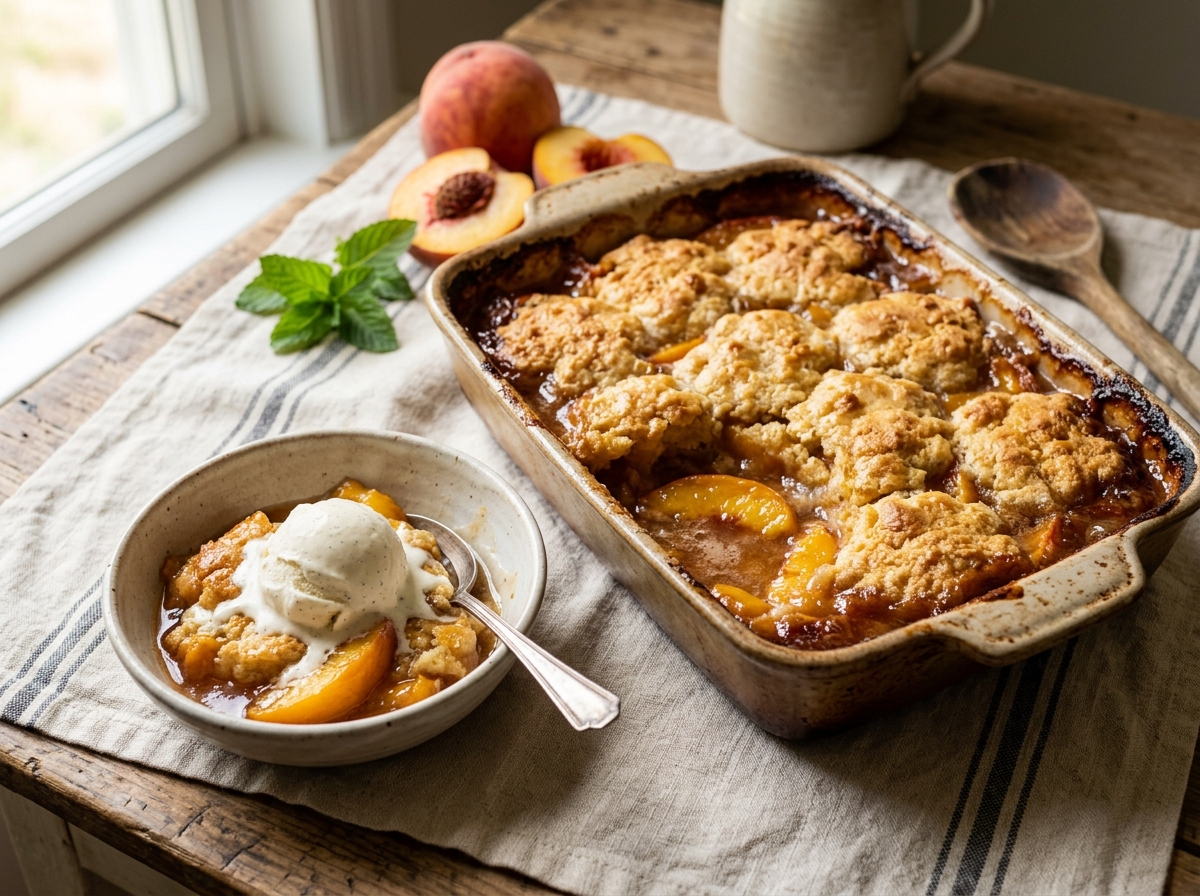
This version skips the biscuit top entirely. Instead, you pour a simple batter over the peaches, and it does the work for you—it braises into the fruit, thickens the juices, and bakes into a cake-like crumb all at once. It’s less fussy than layering, easier to portion, and honestly more interesting to eat.
Peach Cobbler
Serves 6 to 8 · Prep 20 min · Cook 50 min
-
Heat your oven to 375°F with a rack in the middle.
-
Toss the peach slices with the granulated sugar, honey, lemon juice, and salt in a large bowl. Let them sit for 5 minutes so they start to release juice.
-
Pour the peaches and all their juice into a 9-by-13-inch baking dish. Spread them in a single layer.
-
In a separate bowl, whisk together the flour, sugar, baking powder, and salt until evenly combined.
-
Cut the cold butter into the flour mixture using a fork or your fingertips until it resembles coarse crumbs with some pea-sized pieces still visible.
-
Stir in the milk and vanilla extract until just combined. The batter will be thick and lumpy, closer to cake batter than dough.
-
Drop spoonfuls of batter over the peaches, spreading it gently but leaving some gaps so the fruit shows through. It will not cover the peaches completely.
-
Sprinkle coarse sugar over the top if you like. Bake for 50 to 55 minutes until the batter is golden brown and springs back lightly when you press it, and the fruit is bubbling at the edges.
-
Let it cool for 10 minutes before serving. The batter will still be warm and soft, and the fruit juices will have thickened slightly into a loose sauce.
Why This Recipe Works
- The batter sinks and rises simultaneously—it absorbs fruit juice while baking, which creates a tender crumb that tastes less like cake and more like a peach-soaked custard.
- Leaving gaps in the batter top means the peaches stay in direct contact with the oven heat, concentrating their flavor and creating that essential bubbling at the edges.
- Cold butter rubbed into flour creates small pockets of fat that melt during baking, making the batter tender and rich without needing eggs.
- Honey or brown sugar in the filling adds depth to the peach flavor and helps the juices thicken into a loose sauce rather than staying watery.
Tips for Best Results
- Do not overmix the batter. Lumps are fine and will even out as the cobbler bakes. Overmixing develops gluten, which makes the top tough and rubbery.
- Use peaches that are ripe but still firm enough to hold their shape when sliced. Overripe fruit will turn to mush and create a soupy filling.
- Watch the edges starting around minute 45. If the batter is browning too fast before the center is set, loosely cover with foil for the last few minutes.
- Let the cobbler cool slightly before serving. The filling will be molten if you dig in right away, but 10 minutes makes it much easier to portion without spilling.
Variations and Substitutions
- Swap half the peaches for nectarines or a mix of stone fruits. The cooking time stays the same.
- Replace the milk with buttermilk for a tangier crumb, or use oat milk if you need dairy-free. The texture will be slightly less tender but still good.
- Add a pinch of cardamom or 1/4 tsp almond extract to the batter for a subtle spice note that plays well with peach.
- Make it savory by omitting sugar from the batter, cutting the honey in the filling to 1 tsp, and adding fresh herbs like thyme to the fruit. The batter will be less sweet but still soft and custard-like.
Frequently Asked Questions
How do I store leftovers?
Cover the baking dish with plastic wrap or transfer to an airtight container and refrigerate for up to 3 days. Reheat gently in a 300°F oven for 10 minutes until warm, or eat it cold straight from the fridge.
Can I make this ahead and bake it later?
Yes. Prep the peaches and make the batter separately up to 8 hours ahead and keep both in the fridge. Assemble in the baking dish no more than 30 minutes before baking, or the batter will absorb moisture and lose its rise.
What if I don’t have fresh peaches?
Frozen peaches work well here. Use 2 lbs, thawed and drained of excess liquid. Canned peaches are too soft and will turn mushy; skip them.
Why is my cobbler too wet?
Peaches vary in water content depending on ripeness and variety. If your filling looks more like soup than sauce after baking, your peaches were very juicy. For the next batch, reduce the milk in the batter to 1/4 cup, or strain some of the peach liquid before baking.
This cobbler is the easiest way to turn a pile of peaches into something warm and whole. There’s no rolling, no cutting biscuits, no complicated assembly. Just peaches, batter, and the oven doing most of the work. Make it this week.