Buttermilk Pie
A custard pie that bakes into creamy filling with barely any fuss, and you likely have everything in the pantry right now.
There’s a moment on a quiet afternoon when you open the fridge and realize you have buttermilk, eggs, and butter but nothing fresh to show for dinner. This is the pie that answers that moment. No trip to the store. No fruit to prep or macerate.
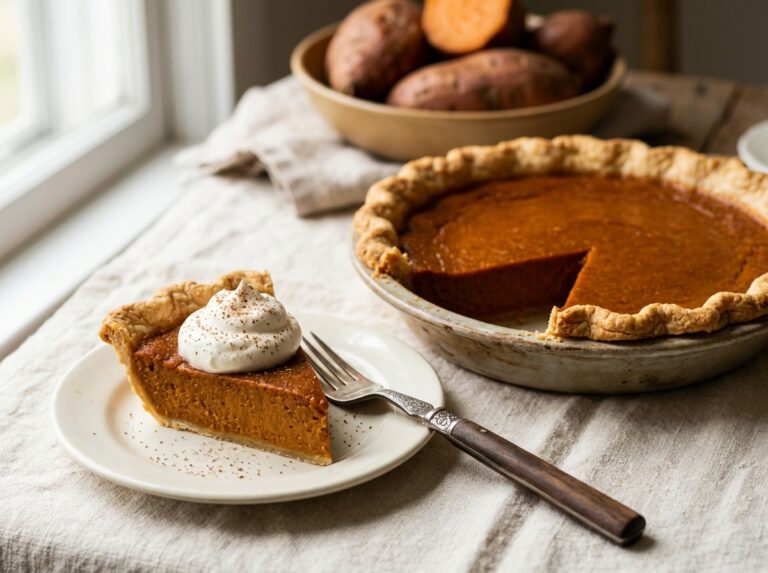
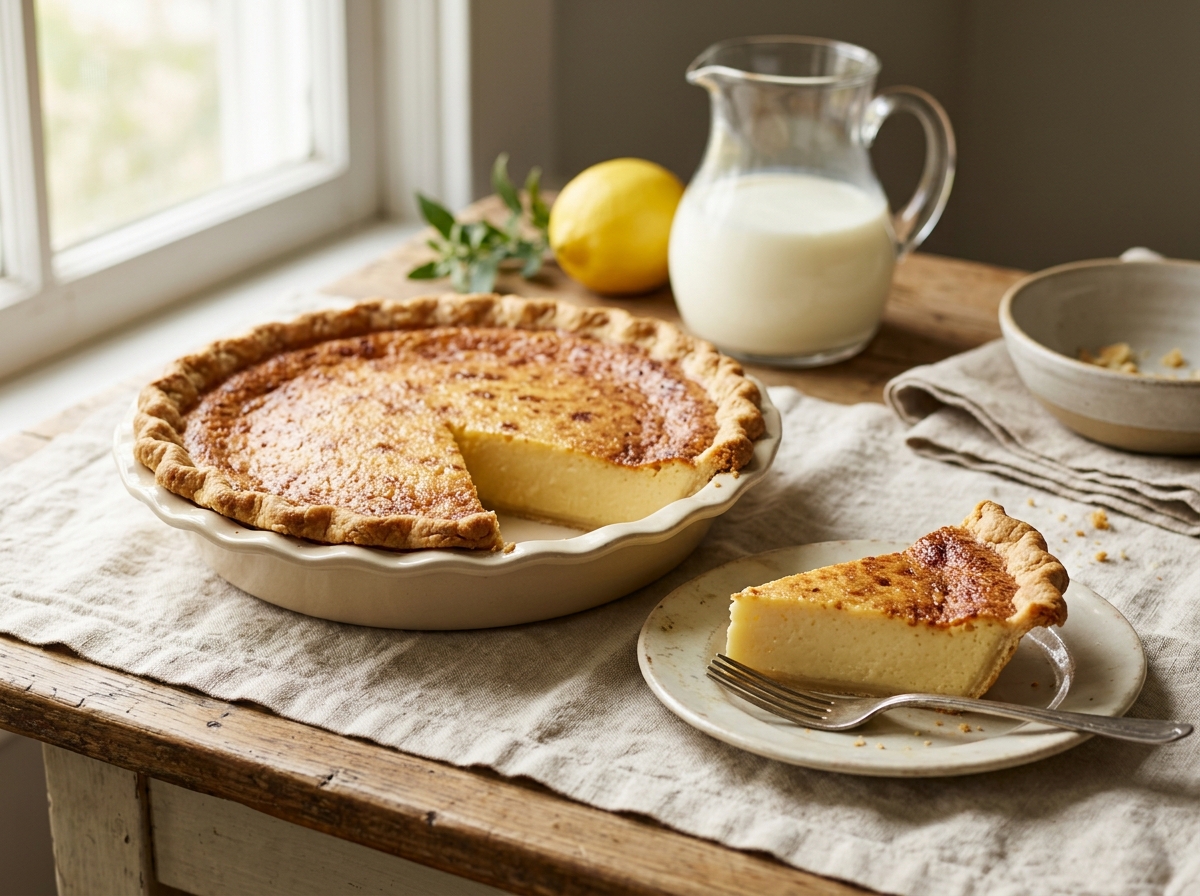
Buttermilk pie is old-fashioned comfort that tastes more complicated than it is. The filling is somewhere between a custard and a chess pie—creamy, slightly tangy, with a thin layer of caramelized sugar on top that catches when you cut into it. It’s the kind of dessert that shows up at church suppers and grandmothers’ tables because it works every single time and asks very little of you.
Most of your work is done the moment you stir the batter. From there, the oven takes over.
Buttermilk Pie
Serves 8 · Prep 10 min · Cook 50 min
-
Heat your oven to 350°F. Place the pie crust in a 9-inch pie pan and let it sit at room temperature while you make the filling.
-
In a bowl, whisk together the sugar and flour until no lumps remain. This keeps the sugar from settling at the bottom and helps it distribute evenly through the custard.
-
Add the melted butter to the sugar mixture and stir well. Pour in the eggs one at a time, whisking after each addition until the mixture looks pale and smooth.
-
Pour in the buttermilk and vanilla, then add the salt and nutmeg if using. Whisk until the batter is completely smooth with no streaks of egg white visible. This should take about one minute of steady whisking.
-
Pour the filling into the crust. The batter will seem thin, but trust it—this is correct. The filling will set as it bakes.
-
Bake for 50 to 55 minutes at 350°F. The pie is done when the edges are set and slightly golden but the very center still jiggles slightly when you gently shake the pan, like barely-set Jello. A knife inserted an inch from the edge should come out clean.
-
Remove from the oven and let it cool on a wire rack for at least 2 hours. It will continue to set as it cools. Serve at room temperature or chilled.
Why This Recipe Works
- Flour mixed into the sugar prevents it from sinking to the bottom and creates a slightly thick custard body that sets properly. Without it, you’d end up with a gritty layer of sugar at the base.
- The buttermilk’s acidity balances the sweetness and adds a subtle tang that keeps the pie from cloying. Whole milk would make it taste flat and one-note.
- Melted butter incorporates into the batter instantly and distributes evenly, avoiding lumps and ensuring a smooth texture throughout the filling.
- Baking at a moderate 350°F allows the custard to set gently without the edges overbaking or curdling. A hotter oven risks a cracked, rubbery top.
Tips for Best Results
- Don’t overbake. The filling should still have a slight jiggle in the very center when you pull it out. It will firm up completely as it cools, and residual heat will finish the cooking.
- Whisk the batter thoroughly until completely smooth. Any specks of unbeaten egg white will cook into small rubbery bits you’ll notice when you bite into it.
- Use a crust that comes to room temperature before filling. A cold crust won’t bake evenly with the filling.
- Let it cool slowly on the counter and then in the fridge before slicing. Cutting into a warm pie will make the filling slump.
Variations and Substitutions
- Add a teaspoon of lemon zest to the batter for brightness. It’s subtle but shifts the whole flavor profile from rich to more lively.
- Swap vanilla for almond extract, using three-quarters of a teaspoon. Almond has a deeper, almost floral quality that works beautifully here.
- Make it with half buttermilk and half regular whole milk if you’re out of buttermilk. You lose some tang, but the pie still bakes and tastes good.
- For a savory version, omit the vanilla and nutmeg, reduce the sugar to three-quarters cup, and add a teaspoon of black pepper and a pinch of cayenne. This leans toward a quiche-like texture and pairs well with greens.
Frequently Asked Questions
How long does buttermilk pie keep, and how do I store it?
It lasts up to 3 days in the fridge, loosely covered so the crust doesn’t steam and soften. You can eat it cold straight from the fridge or let slices come to room temperature for about 15 minutes, which brings out the flavor more.
Can I make this the day before?
You can mix the filling and pour it into the crust a day ahead, then cover and refrigerate it unbaked. Bake it straight from the cold state, adding 5 to 10 minutes to the bake time. The pie itself is fine to bake and serve the next day.
What if I don’t have buttermilk?
Mix one tablespoon of lemon juice or white vinegar into one cup of whole milk and let it sit for 5 minutes. It’s not identical but creates enough acidity to work in this recipe.
Why is my filling still liquid in the middle when I take it out?
This is actually correct. The filling continues to set as it cools both on the counter and in the fridge, a process that takes a couple of hours. If the edges are set and only the very center jiggles, it’s done baking.
This pie lives for the moment when you’re short on time and big on hunger. It asks almost nothing of you and delivers something warm and a little bit fancy. Make it on a regular Tuesday. Serve it plain. It doesn’t need anything else.