Old-Fashioned Caramel Cake
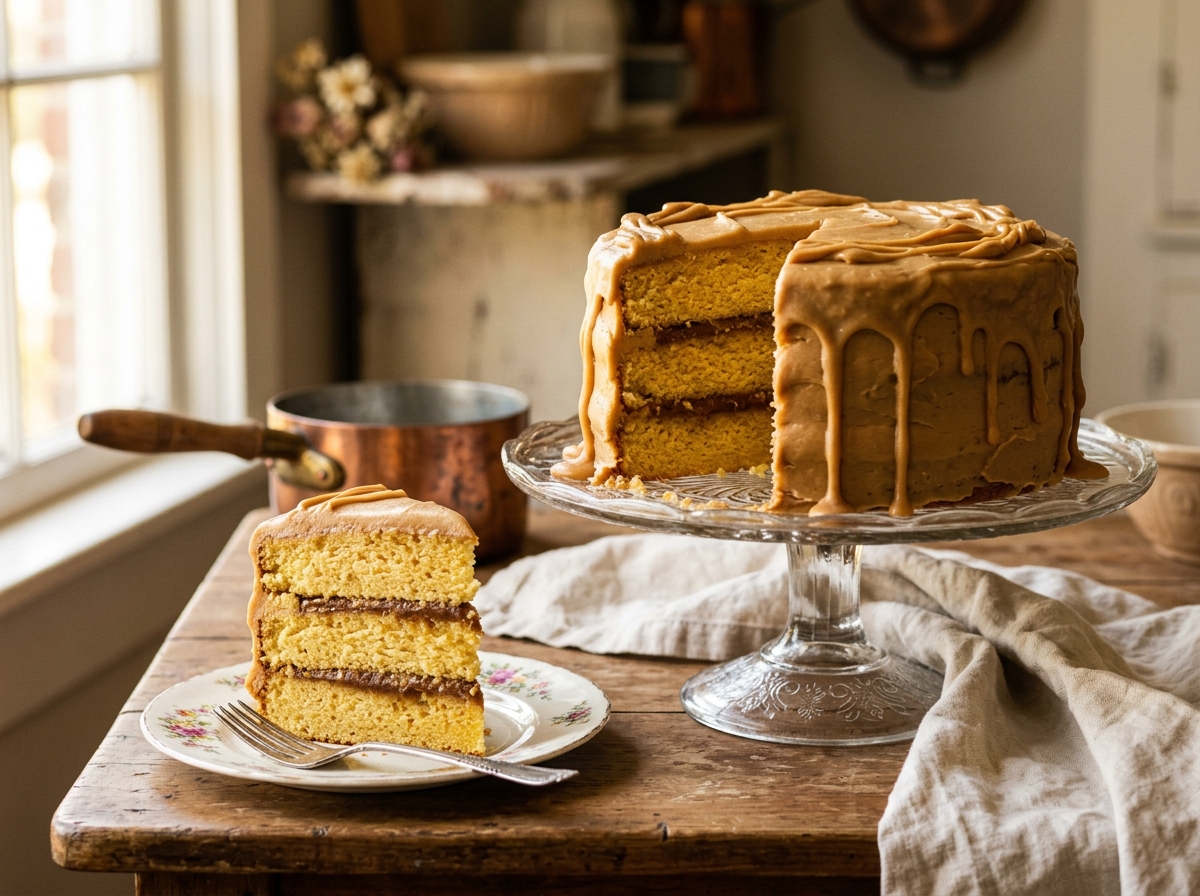
Tender yellow cake with a cooked caramel icing that stays glossy and soft, the kind that sticks to your fork.
There’s a moment when you pour hot caramel over butter and cream, and the whole kitchen fills with that burnt-sugar smell. That’s when you know you’re making something real.
This is the cake people remember. Not fussy, not trendy, just a soft yellow sponge under a caramel icing that never hardens or cracks. The secret is in the timing—the frosting has to hit the cake while it’s still warm enough to stay spreadable, but cool enough not to melt into the crumb. It’s a narrow window, and once you know it, the cake becomes reliable.
Make this when you want something that tastes like home, or when you need to prove you can bake without thinking about it too hard.
Old-Fashioned Caramel Cake
Serves 8 · Prep 25 min · Cook 35 min
-
Heat your oven to 350°F. Grease and flour a 9-inch round cake pan.
-
Whisk together flour, baking powder, and salt in a small bowl. Set aside.
-
Cream the 6 tablespoons of softened butter and sugar together on medium speed for 3 to 4 minutes until it’s pale and fluffy. You’ll see the color lighten and the mixture become airy.
-
Add eggs one at a time, beating well after each. Add vanilla. The batter should look smooth and thick.
-
Add the flour mixture and milk in three additions, starting and ending with flour. Mix on low speed until just combined. Stop as soon as you don’t see dry flour.
-
Pour into the prepared pan. Smooth the top. Bake for 30 to 35 minutes until a toothpick inserted in the center comes out with a few moist crumbs. The cake will be golden on top and spring back when you press it lightly.
-
Let the cake cool in the pan for 10 minutes, then turn it out onto a wire rack. You want the cake still warm—about body temperature—when you frost it.
-
While the cake cools, make the icing. Melt the 6 tablespoons of butter in a heavy saucepan over medium heat.
-
Add the brown sugar and stir constantly for 2 minutes. The mixture will bubble and the sugar will dissolve into the butter, turning dark amber.
-
Remove from heat and pour in the cream slowly. It will hiss and foam. Stir until smooth. The icing will seize up for a moment, then relax as you keep stirring—this takes about 30 seconds.
-
Stir in salt and vanilla. Let the icing cool for 5 to 8 minutes, stirring once or twice. You want it warm but thick enough that a spoon dragged through it leaves a trail that holds for a second or two.
-
If the cake is still on the rack, transfer it to a serving plate. Pour or spread the icing over the top, letting it drip down the sides. Work quickly but don’t rush. If the icing becomes too thick, warm it gently over low heat for 10 seconds.
-
Let the cake sit for at least 30 minutes before slicing so the icing can set slightly and the cake can cool all the way through.
Why This Recipe Works
- The ratio of butter to flour is high, which keeps the crumb tender and moist without being greasy.
- Cooked caramel icing relies on the butter and brown sugar emulsifying in the cream. Once they’ve cooked together, they can’t separate again even as the icing cools and sets, so it stays spreadable.
- The timing window—frosting a warm cake—is crucial because the heat from the cake keeps the icing just fluid enough to coat evenly, but not so hot that it pools into the crumbs.
- Letting the finished cake rest before serving lets the icing firm up slightly while still staying soft to the bite, giving you that tender crumb and fudgy frosting in one slice.
Tips for Best Results
- Don’t overthink the caramel. Cook it just until the brown sugar dissolves and the mixture turns amber, about 2 minutes. Overcooking it makes the icing taste burnt and grainy.
- The icing must cool to the right consistency before going on the cake. If it’s too hot, it soaks into the crumb. If it’s too cold, it will chunk and be impossible to spread. Aim for the texture of warm pudding.
- Use an instant-read thermometer if you’re unsure about the cake’s temperature. You want it around 90 to 100°F when you ice it—cool enough to hold the icing on top, warm enough to keep it pourable.
- Don’t refrigerate this cake. Cold makes the icing seize and harden. Store it covered at room temperature and eat it within two days.
Variations and Substitutions
- For a darker, richer cake, use 3/4 cup packed brown sugar instead of white sugar in the batter.
- Add 2 tablespoons of bourbon or rum to the icing after it cools slightly for an adult version with a deep, warm flavor.
- Make it dairy-free by swapping the milk for unsweetened almond milk and using coconut oil instead of butter. The flavor changes noticeably—it becomes lighter and less rich.
- Dust the top with fleur de sel or sea salt right after frosting for a contrast that brings out the caramel’s depth.
Frequently Asked Questions
How long does this cake keep?
Two days covered at room temperature. The icing stays soft and the cake stays moist. Don’t refrigerate it—the icing will turn hard and grainy. After two days, the cake begins to dry out, though it’s still edible.
Can I make this the day before?
Yes. Bake the cake a full day ahead and leave it uncovered to cool completely. Make the icing and frost it the next day, no more than 4 hours before serving. The icing sets better on a room-temperature cake.
What if I don’t have brown sugar?
You can use white sugar mixed with 1 tablespoon of molasses, or even muscovado sugar if you have it. The flavor will be slightly less deep, but the icing will work the same way.
Why did my icing seize and become grainy when I added the cream?
You added the cream too fast or the mixture was too cool. Always pour the cream in slowly and stir constantly. If it does seize, set the pan back over very low heat and stir for 30 seconds until it relaxes.
Make this cake when you want something that feels effortless but tastes like you’ve been in the kitchen all day. Once you’ve made it once, you’ll know the feel of that icing at just the right moment, and it becomes second nature. Slice it warm, with coffee. That’s when it’s best.