Chess Pie
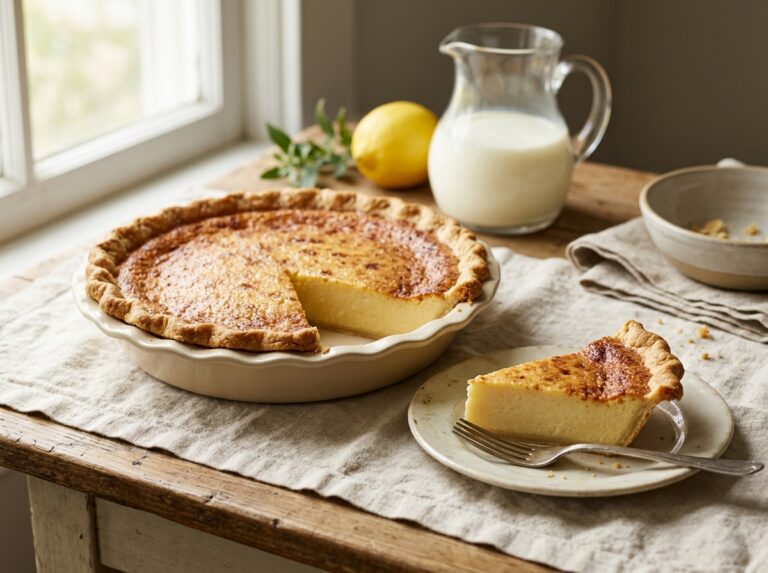
A custard-based chess pie with cornmeal that sets the filling to just the right texture—dense but not heavy, creamy but sliceable.
There’s something about a chess pie that feels like walking into a warm kitchen on a cold afternoon. The filling is simple enough that you can make it without thinking too hard, but it tastes like someone has been baking all day.
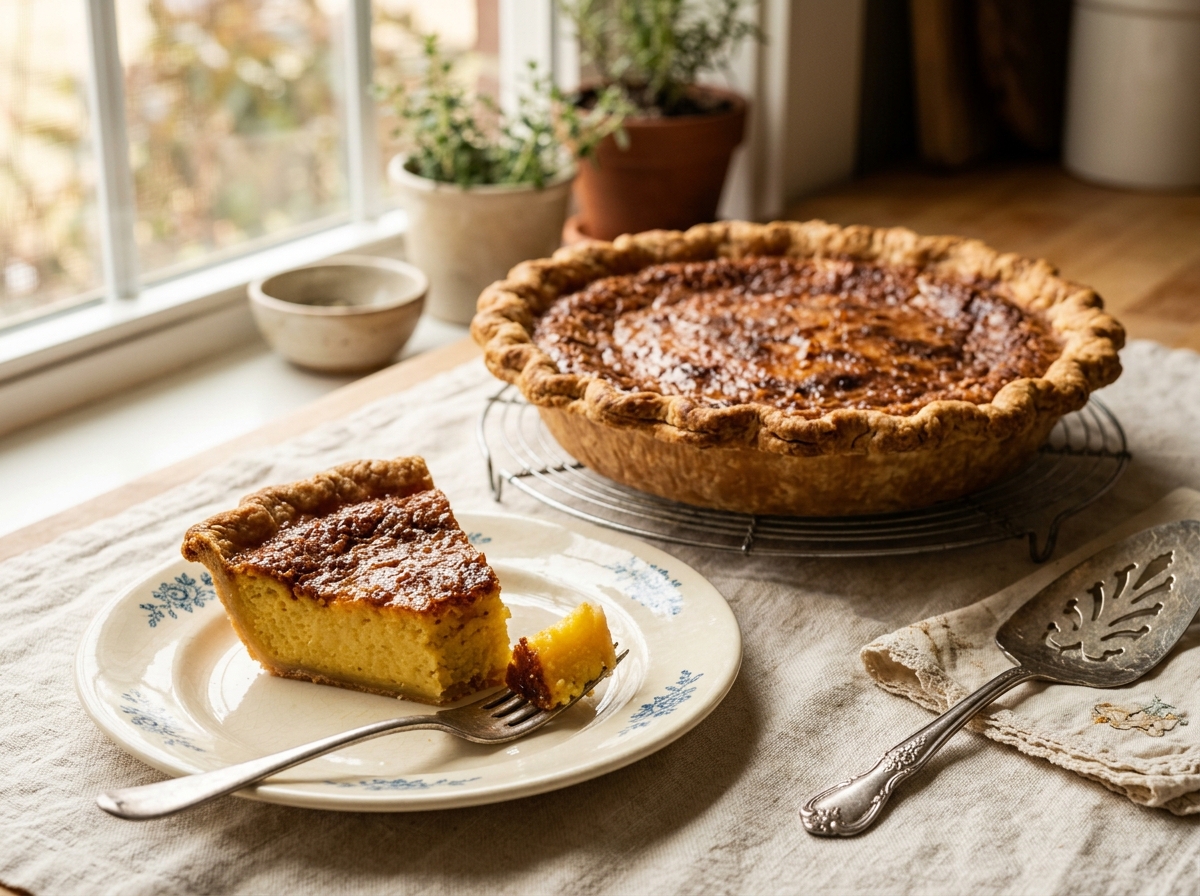
Chess pie is old. It comes from the American South and Britain, and no one quite agrees on where the name came from—some say it’s because the filling resembles chess pieces, others say it’s just a corruption of an old word. What matters is that it still works. The custard is tangy and sweet all at once, with that particular texture that happens when you bake eggs and sugar together until they set like velvet.
The secret is cornmeal. A small amount stirred into the filling stops it from being runny while it bakes, but keeps it creamy inside. It also adds a gentle grittiness that makes the pie more interesting to eat, and helps the filling set without cracking.
Chess Pie
Serves 8 · Prep 20 min · Cook 45 min
-
Heat your oven to 350°F.
-
Place the pie crust in a 9-inch pie dish and set it on a baking sheet. Prick the bottom all over with a fork so steam can escape.
-
In a large bowl, whisk together the melted butter, sugar, cornmeal, and salt. Mix well so there are no lumps of cornmeal sitting at the bottom.
-
Add the eggs one at a time, whisking after each one until the mixture is smooth and pale.
-
Stir in the milk, vinegar, and vanilla. The vinegar might look like it will curdle the milk, but it won’t—it’s just balancing the sweetness. Whisk until everything is combined and smooth.
-
Pour the filling into the crust. It will look thin, almost like a custard base.
-
Bake for 40 to 45 minutes, until the top is golden brown and the filling has risen slightly. The center should jiggle just a little when you gently shake the pie, like a set custard, not like a liquid.
-
Let it cool on a wire rack for at least 2 hours before slicing. The filling will continue to set as it cools.
-
Serve at room temperature or chilled. The custard should feel silky on your tongue and cut cleanly with a fork.
Why This Recipe Works
- Cornmeal absorbs moisture as the eggs cook, thickening the filling without making it dense or starchy. It works the way flour would in a custard pie, but adds subtle texture instead of weight.
- The vinegar cuts through the sugar so the pie tastes complex and balanced rather than cloying. It also mimics the tanginess of buttermilk or sour cream without adding extra liquid.
- Baking at 350°F lets the eggs set gently without scrambling or curdling. The filling stays creamy because the temperature stays low enough that the eggs cook through without separating.
- Cooling the pie completely before slicing allows the cornmeal particles to fully absorb liquid and the custard to firm up. Cutting it warm will give you a soupy mess.
Tips for Best Results
- Don’t skip pricking the crust. Steam gets trapped underneath and can cause the bottom to puff up or stay doughy.
- Whisk the cornmeal into the butter and sugar before adding eggs. This keeps it from clumping when it hits the wet ingredients.
- Use distilled white vinegar, not apple cider or wine vinegar. The flavor is cleaner and won’t muddy the custard.
- Watch for the jiggle test, not a perfectly set center. The pie will continue to cook slightly as it cools. Overbaking makes it rubbery.
- If the crust edges brown too fast, cover them loosely with foil after 20 minutes of baking.
Variations and Substitutions
- For a boozy version, replace one tablespoon of the milk with bourbon or rum. It adds warmth without making the filling thin.
- Swap the white vinegar for lemon juice if you prefer a brighter flavor. Use the same amount.
- Add a pinch of nutmeg or a quarter teaspoon of cinnamon to the filling for warmth. Don’t overdo it—you want hints, not spice cake.
- For a gluten-free pie, use a gluten-free crust. The filling itself has no flour and will work perfectly.
- A splash of almond extract instead of vanilla gives the pie a more complex, almost marzipan-like depth, though it changes the character quite a bit.
Frequently Asked Questions
How long does chess pie keep?
It lasts up to four days in an airtight container in the fridge. The texture stays creamy and the flavor actually deepens a day or two after baking. Don’t freeze it—the filling becomes grainy when thawed.
Can I make it ahead?
You can mix the filling up to 24 hours ahead and keep it covered in the fridge. Pour it into the unbaked crust just before putting it in the oven. You can also bake the pie up to three days in advance and store it covered in the fridge.
What if I don’t have cornmeal?
You can use fine polenta or masa harina, though the flavor will change slightly. A tablespoon of flour mixed with a tablespoon of cornstarch works in a pinch, but the filling will be a bit less interesting. Don’t omit it entirely—the filling needs something to absorb moisture or it will be runny.
Why is my pie still jiggly in the center after 45 minutes?
The filling should jiggle like set custard, not slosh like liquid. If it’s truly liquid, give it another five minutes and check again. Ovens vary, so bake time can range from 40 to 50 minutes depending on yours. Remember that the pie will continue to set as it cools—that jiggle is intentional.
Chess pie is not hard to make, and it never looks fancy, but somehow it tastes like home. The first time you slice into one and see that golden custard inside, you’ll understand why people have been making it for generations. Give it a try.