Shrimp and Grits
Creamy stone-ground grits topped with buttery shrimp and a quick pan sauce that tastes like you’ve been cooking all day.
There is a moment on a weeknight when you’re standing at the stove and the smell of shrimp hitting hot butter fills your kitchen, and suddenly dinner feels like celebration. Shrimp and grits does that. It looks fancy enough to serve guests, but it comes together faster than you’d think, and the real magic is in understanding how to cook the grits so they’re actually creamy and smooth instead of gluey or thin.
Stone-ground grits are different from instant. They have real texture and corn flavor, but they need time and attention. Get the timing right and you’ll understand why this dish has stayed on restaurant menus for decades. It’s not because it’s complicated. It’s because when it works, it’s perfect.
Shrimp and Grits
Serves 4 · Prep 10 min · Cook 45 min
-
Bring 4 cups of stock to a boil in a heavy-bottomed pot over medium-high heat. Add 1 teaspoon of salt.
-
Slowly pour in the grits while whisking constantly for 2 to 3 minutes. The mixture will thicken and bubble. You should hear a steady popping sound from the bottom of the pot once it’s thick enough.
-
Reduce heat to low and stir in the milk. You will see the grits loosen slightly. This is normal.
-
Let the grits simmer gently for 30 to 35 minutes, stirring every few minutes to prevent sticking and lumping. The grits are done when a spoon dragged across the bottom of the pot leaves a trail that slowly fills back in. They should taste creamy and smooth, not grainy or chalky.
-
Stir in 2 tablespoons of butter and the cheddar until fully melted and combined. Taste and adjust salt and white pepper. The grits should taste savory and rich.
-
While the grits finish, cook the bacon in a large skillet over medium heat until crispy, about 8 minutes. Remove and set aside, leaving 2 tablespoons of bacon fat in the pan.
-
Add the onion to the bacon fat and cook over medium heat for 4 to 5 minutes until softened and translucent. Add garlic and cook for 1 minute more until fragrant.
-
Pat the shrimp dry with paper towels. Increase the skillet heat to medium-high, add the remaining 2 tablespoons of butter, then add the shrimp in a single layer. Cook without stirring for 2 to 3 minutes until the bottoms are bright pink and slightly caramelized.
-
Flip each shrimp and cook for 1 to 2 minutes on the other side until the entire shrimp is opaque and firm to the touch. Remove to a plate.
-
Pour the stock and lemon juice into the hot skillet and scrape up any browned bits from the bottom with a wooden spoon. Let it bubble for 1 to 2 minutes until slightly reduced. Stir in the cooked bacon.
-
Return the shrimp to the skillet and toss gently to coat with the pan sauce. Cook for 1 minute just to warm through.
-
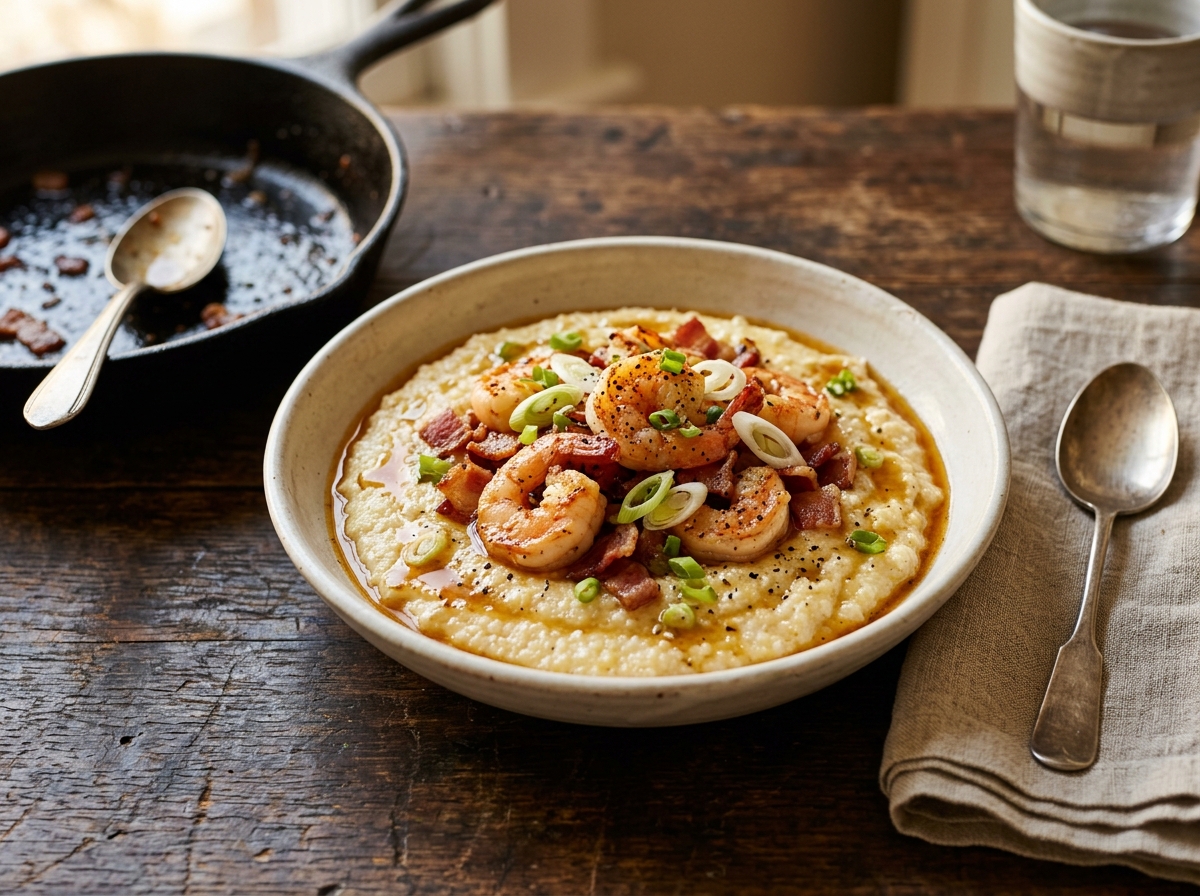
Divide the grits among bowls and top with the shrimp, bacon, and pan sauce. Scatter parsley over each bowl.
-
Serve immediately while the grits are still hot and creamy.
Why This Recipe Works
- Stone-ground grits have large, irregular particles that release starch slowly during cooking, creating genuine creaminess without the gumminess that instant grits develop.
- Slow simmering at low heat for 30 to 35 minutes allows the starch granules to fully absorb liquid and soften, while constant stirring prevents lumps and hot spots that burn the bottom.
- Adding milk partway through loosens the mixture and stops the grits from becoming so thick they seize up. The combination of stock and milk balances corn flavor with richness.
- High-heat cooking on the shrimp creates a quick crust while keeping the inside tender and juicy. The pan sauce made from stock and lemon brings acidity that cuts through the richness of the grits and cheese.
Tips for Best Results
- Do not walk away from the grits. They need stirring every few minutes or they will scorch on the bottom and ruin the entire batch.
- The grits must be truly creamy before you finish cooking them. If they still taste grainy after 35 minutes, keep cooking and stirring until the texture changes. This is the most common mistake.
- Dry the shrimp completely before cooking. Excess moisture prevents browning and makes them steam instead of sear.
- Do not overcrowd the skillet when cooking shrimp. They need room to touch the hot surface. Cook in batches if necessary.
- Use real stone-ground grits from a specialty grocer or online. Supermarket corn meal and instant grits do not have the same flavor or texture, no matter how long you cook them.
Variations and Substitutions
- For a lighter version, skip the cheese and use all stock instead of stock plus milk. The grits will be less rich but still smooth and satisfying.
- Add 2 tablespoons of fresh herbs like thyme or chives to the finished grits instead of cheese for a completely different flavor profile.
- Make a vegetarian version by omitting the bacon and cooking the shrimp in whole butter with a pinch of smoked paprika for depth. The dish loses the bacon richness but gains elegance.
- Substitute andouille sausage for bacon and add a pinch of cayenne to the grits if you want more heat and a Lowcountry edge.
- Use shrimp stock instead of chicken stock if you have it or can make it. The corn and shellfish combination becomes more cohesive.
Frequently Asked Questions
Can I refrigerate leftover shrimp and grits?
You can, but the grits will firm up and lose their creamy texture. Refrigerate the components separately and reheat gently with added stock or milk on the stovetop over low heat, stirring constantly. Reheat the shrimp and sauce separately and combine just before serving.
Can I make the grits a few hours ahead?
Yes. Cook them until fully creamy, then transfer to a heatproof bowl, cover with plastic wrap placed directly on the surface to prevent a skin from forming, and keep them at room temperature for up to 2 hours. Reheat gently over low heat in a pot, stirring often and adding warm stock if they’ve thickened too much.
What if I can’t find stone-ground grits?
Polenta is not a true substitute because it has a different grind and will not cook the same way. If you cannot find stone-ground grits, order online. Instant grits will never become as creamy and will taste noticeably different no matter the technique.
Why do my grits keep getting lumpy?
Lumps form when dry grits hit hot liquid all at once or when you stop stirring. Always pour the grits slowly into boiling liquid while whisking constantly, and stir every few minutes throughout cooking. If you do get lumps, push the grits through a fine-mesh sieve into a clean pot and continue cooking.
Making shrimp and grits at home teaches you something important about patience and attention. It is not hard, but it does ask you to show up for thirty minutes and stir. When you taste the result, creamy and buttery and bright with lemon, you’ll understand why that time matters. Make this on a night when you want to feel like you’ve done something real.