Jambalaya
A one-pot dinner where the rice drinks in all the flavour from sausage, seafood, and spices.
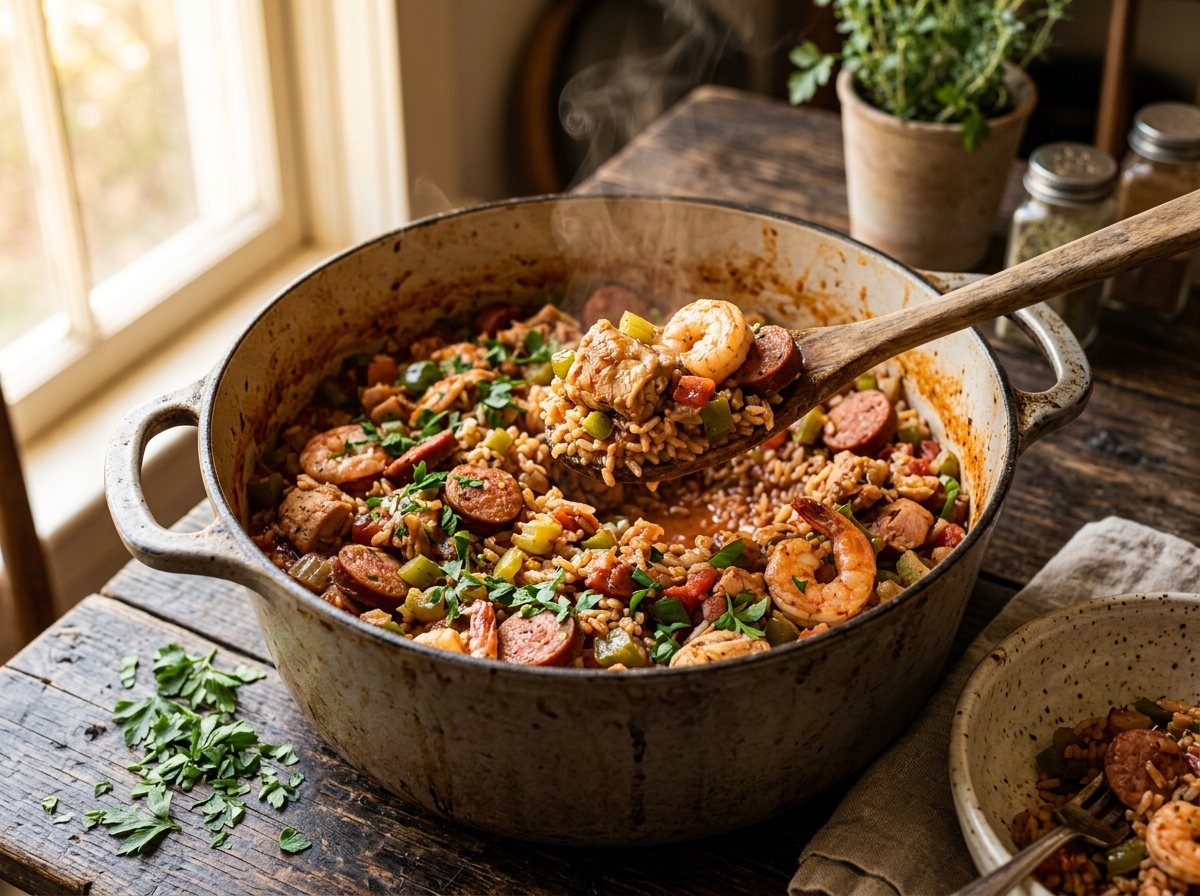
The smell of jambalaya cooking is enough to stop you in your tracks. Onions and celery softening into the holy trinity, sausage browning until the edges crisp, then the rice tumbling into a broth that turns golden and steaming. It is the kind of dish that fills a kitchen with warmth and promises everyone will sit down hungry and leave full.
Jambalaya gets tangled up in storytelling. You will hear arguments about whether it is Cajun or Creole, and both are right. This one is Creole. Creole jambalaya has tomatoes and builds its flavour with the holy trinity and a dark roux, usually made with oil instead of butter. It is the New Orleans version, city food born from French, Spanish, and West African cooking all in one pot.
Cajun jambalaya, by contrast, skips the tomatoes and comes from the rural bayou. It relies on a darker roux and harder spices. This recipe leans into the Creole side because the tomatoes do real work here, adding acidity that keeps the rice from feeling heavy and a slight sweetness that balances the heat.
Jambalaya
Serves 6 to 8 · Prep 20 min · Cook 50 min
-
Heat the oil in a large, heavy-bottomed pot or Dutch oven over medium-high heat. Add the sliced sausage and let it sit for 2 to 3 minutes without stirring so the edges brown and render their fat. Stir and cook for another 2 minutes until the pieces are coloured on all sides. Remove the sausage to a plate with a slotted spoon, leaving the fat behind.
-
Lower the heat to medium. Add the onion, celery, and bell pepper to the pot and stir often for 5 to 7 minutes until the vegetables soften and the onion turns translucent. You should smell the vegetables sweetening as they release their moisture.
-
Add the garlic and stir for 30 seconds until fragrant. Stir in the tomato paste and cook for 1 minute, letting it coat the vegetables and deepen in colour.
-
Sprinkle in the smoked paprika, oregano, thyme, cayenne, and black pepper. Stir constantly for 30 seconds so the spices bloom and release their oils. The pot will smell warm and deep.
-
Pour in the crushed tomatoes and stock, scraping the bottom of the pot with a wooden spoon to lift any browned bits. Add the bay leaves and cooked sausage back in. Stir to combine and bring to a simmer over medium-high heat.
-
Add the rice and stir once to distribute it evenly. The liquid should just cover the rice by half an inch. Bring the pot to a steady simmer, then lower the heat to medium-low. Do not stir the rice from this point forward.
-
Cook uncovered for 18 to 20 minutes until the rice is tender and most of the liquid has been absorbed. You should hear occasional gentle bubbles at the edges and smell the toasted rice beginning to catch. If using shrimp and okra, stir them in now and cook for 3 to 4 minutes more until the shrimp turn opaque and the okra is tender.
-
Remove from heat and taste. Adjust salt and cayenne to your heat preference. Let the pot sit covered with a kitchen towel for 5 minutes so the rice relaxes and absorbs the last bits of steam. Fluff gently with a fork.
-
Scatter the chopped scallions over the top and serve straight from the pot.
Why This Recipe Works
- The holy trinity of onion, celery, and bell pepper releases natural sugars as it softens, building a sweet, savoury base that gives the whole pot depth without extra seasoning.
- Tomato paste is concentrated and cooked first into the vegetables, which deepens its flavour and stops it from tasting sharp or one-note in the finished dish.
- The rice cooks directly in the spiced broth without stirring, so each grain absorbs flavour and stays separate instead of turning gluey.
- Sausage is browned first, which renders its fat and creates browned bits that flavour the whole pot. The fat stays behind to cook the vegetables in, adding richness without needing butter or cream.
- The spices are bloomed in hot fat after the tomato paste, which releases their essential oils and makes them taste roasted and integrated rather than powdery.
Tips for Best Results
- Do not stir the rice once you add it. Stirring breaks the grains and releases starch, turning the dish creamy instead of fluffy. Trust the heat to do its work.
- Use stock that is not too strong. A gentle chicken or seafood stock lets the spices and vegetables shine. Beef stock will overpower the dish.
- Brown the sausage without moving it at first. This high, dry heat is what builds flavour through the Maillard reaction. Stirring too early steams the meat instead.
- Taste and adjust the cayenne at the end, not the beginning. You can always add more heat, but you cannot take it back. Different cayennes vary in strength.
- If the rice is still wet after 20 minutes, raise the heat slightly for 1 to 2 minutes to evaporate the excess liquid. If the rice is dry but still hard, add a few tablespoons of stock and cook covered for 3 to 5 minutes more.
Variations and Substitutions
- For a vegetarian version, skip the sausage and add extra okra, mushrooms, or a can of white beans. The flavour will be lighter but the dish still works because the spices and tomato carry it.
- Use chicken thighs instead of sausage. Dice them and brown them first, which takes 5 to 7 minutes. They will not render as much fat, so add an extra tablespoon of oil to the pot.
- Make it spicier by adding a whole dried red chilli or a splash of hot sauce at the end. Creole jambalaya can take heat without losing its balance.
- For a darker, more Cajun-leaning flavour, omit the tomatoes and tomato paste. Add an extra 1/2 cup of stock and cook 1 to 2 minutes longer. The rice will be earthier and less bright.
- Add seafood only at the very end. Fresh crab, mussels, or scallops can go in during the last few minutes of cooking. They toughen if cooked too long in the hot rice.
Frequently Asked Questions
How long does jambalaya keep in the fridge?
Up to 4 days in an airtight container. Reheat gently on the stovetop over medium heat, stirring often and adding a splash of water or stock if it feels dry. The rice will firm up as it cools, so do not be surprised if it seems thicker the next day.
Can I make this the day before?
Yes. Make it completely, let it cool to room temperature, then cover and refrigerate. Reheat the next day on the stovetop, stirring often and loosening it with a bit of liquid. It actually tastes better the second day because the spices have time to settle and deepen.
What if I do not have andouille sausage?
Chorizo works well and will give a slightly different but equally good flavour. Kielbasa is milder but will still brown and flavour the pot. Avoid breakfast sausage because it breaks apart and turns the broth cloudy. For heat and smoke without meat, use smoked paprika and let the vegetables carry more of the dish.
Why is my jambalaya mushy?
You likely stirred the rice during cooking, which breaks the grains and releases starch. Once you add the rice, leave it alone until the liquid is mostly absorbed. Also check that your liquid-to-rice ratio is correct (about 1.5 cups liquid per cup of rice). Too much liquid will steam the rice into mush.
Jambalaya is one of those dinners that feels special but asks very little of you. Everything goes into one pot, the kitchen fills with the smell of something real, and you end up with a table full of people who stayed longer than they meant to. Make it once and you will understand why it matters.