Chicken Fried Steak with Cream Gravy
A double-dredged crust that stays crispy even under silky gravy, ready in under an hour.
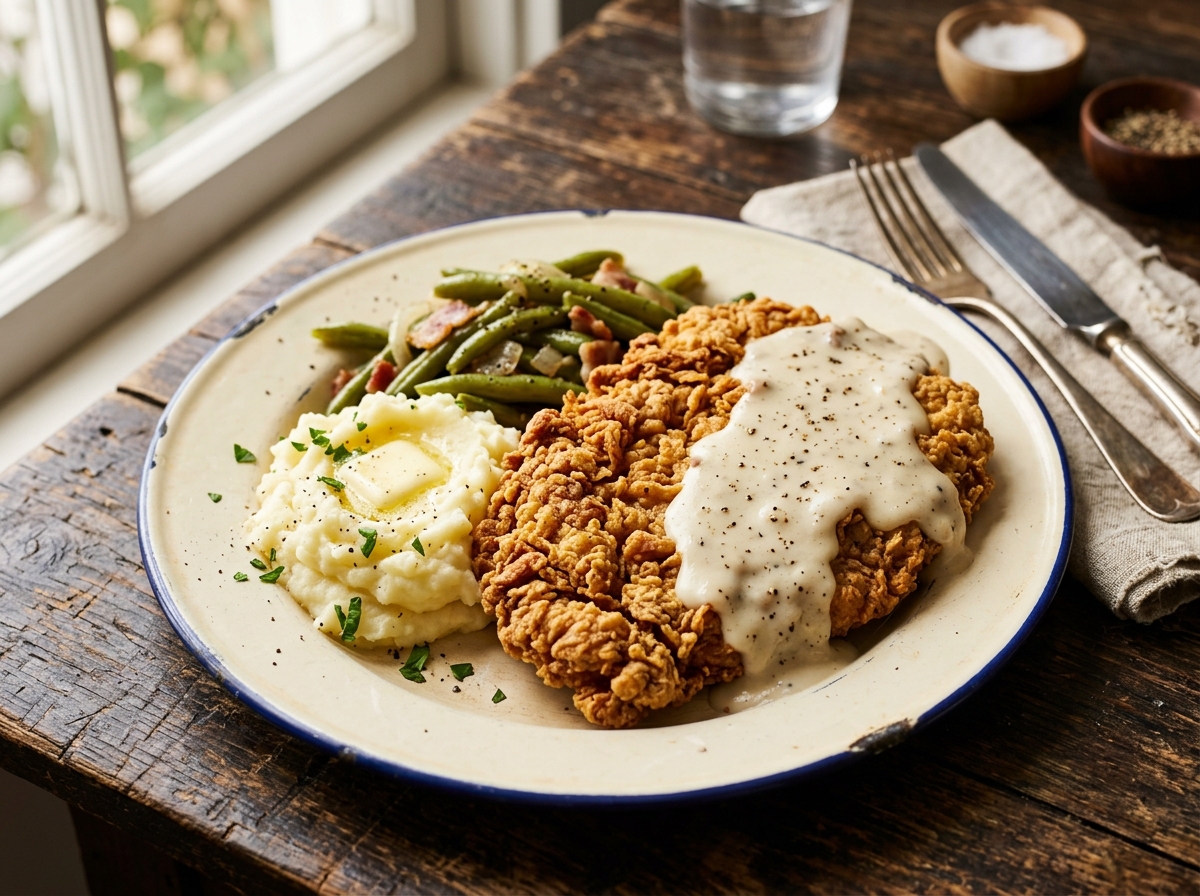
There’s a moment when a thin-pounded steak hits hot oil and the kitchen fills with that crackling, nutty smell—that’s when you know dinner is going to be good. Chicken fried steak is one of those dishes that tastes like someone spent all afternoon cooking, but it doesn’t ask much of you at all.
The secret to making this work is understanding that the breading needs two passes through the seasoned flour to hold up against a cream sauce without getting soggy. One coat leaves gaps. Two coats create a shell that stays crisp and golden, delivering that satisfying crunch the whole way through.
Chicken Fried Steak with Cream Gravy
Serves 4 · Prep 20 min · Cook 25 min
-
Pat the steaks dry with paper towels. If they are thicker than a quarter-inch, lay them between plastic wrap and gently pound them to an even 1/4-inch thickness using a meat mallet.
-
Mix together 1 cup flour, 1 tsp salt, 1/2 tsp pepper, 1/2 tsp garlic powder, and 1/4 tsp cayenne in a shallow bowl. Pour the buttermilk into another shallow bowl.
-
Working with one steak at a time, dredge it in the flour mixture, coating both sides and shaking off excess. Set it aside on a plate.
-
Once all steaks are floured, dip each one into the buttermilk, allowing excess to drip off, then dredge it in the flour mixture again. This second coat is what holds the crust together under gravy. Place on a clean plate.
-
Heat 2 tbsp oil and 2 tbsp butter in a large cast-iron skillet over medium-high heat until the butter froths and the oil shimmers, about 2 minutes.
-
Lay the steaks in the hot fat without crowding—you should hear an immediate, vigorous sizzle. If the pan is too crowded, work in batches. Cook for 3 to 4 minutes on the first side until the crust is golden brown and sounds crisp when you tap it with the edge of a spatula.
-
Flip and cook for another 3 to 4 minutes on the second side until both sides match in color and the meat is firm to the touch. Transfer to a plate.
-
Pour off all but 2 tbsp of the fat left in the skillet. Whisk in 2 tbsp flour and stir constantly for 1 minute until it smells toasted and looks like wet sand.
-
Slowly pour in 1.5 cups milk while whisking to avoid lumps. Keep whisking for 2 to 3 minutes as the gravy thickens and reaches a simmer—it should coat the back of a spoon and show a line when you drag your finger across it.
-
Season with 1/2 tsp salt and 1/4 tsp pepper. Taste and adjust. Return the steaks to the skillet or serve them plated with the gravy spooned over top.
Why This Recipe Works
- The double dredge creates a thick, continuous breading that seals the meat and stays crisp even when draped in cream sauce, instead of dissolving into the gravy after a few minutes.
- Buttermilk adds acid and enzymes that begin to tenderize the meat while the coating soaks, making even budget cuts tender and juicy by the time they hit the pan.
- Cooking at medium-high heat in a 1:1 ratio of oil to butter gives you the high smoke point you need for color while the butter carries the flavor, producing a brown crust in 3 to 4 minutes rather than 8.
- Making the gravy in the same skillet means you capture all the browned bits and rendered fat left behind, building flavor without an extra pan to wash.
Tips for Best Results
- Do not skip the buttermilk soak between dredges. This is what holds the second coat of flour to the first. Without it, the breading falls off in clumps.
- Get the pan hot enough that the steak sizzles loudly when it hits. If it just sizzles quietly, the oil is not hot enough and you will end up with a pale, greasy crust instead of a golden one.
- Avoid pressing down on the steaks while they cook. This squeezes out moisture and makes the crust soggy. Let the heat do the work.
- Whisk the gravy constantly while adding the milk and while it thickens. Even a few seconds without stirring can create lumps that are hard to break up.
Variations and Substitutions
- For spicier gravy, add 1/2 tsp smoked paprika and a pinch of hot sauce to the finished sauce.
- Swap the buttermilk for plain yogurt thinned with a little water if you have it on hand; the result will be nearly identical in texture and tenderness.
- Make it with pork cutlets or chicken breasts pounded thin. Reduce the cooking time to 2 to 3 minutes per side since they are more delicate than beef.
- For a lower-dairy gravy, use chicken broth instead of milk and replace the butter with more oil. The sauce will be thinner and less rich, but still silky.
Frequently Asked Questions
How do I store leftovers?
Keep the steak and gravy in separate containers in the refrigerator for up to 3 days. Reheat the steak gently in a 300-degree oven on a covered baking sheet so the crust does not dry out. Warm the gravy separately in a saucepan over low heat, stirring often, and drizzle it over the steak just before serving.
Can I bread the steaks the night before?
Yes. After the second dredge, place them on a plate, cover loosely with plastic wrap, and refrigerate for up to 8 hours. They will actually fry better because the flour has time to adhere more firmly to the meat. Let them sit at room temperature for about 10 minutes before cooking so they are not cold when they hit the hot pan.
What if I don’t have buttermilk?
Mix 1 cup whole milk with 1 tbsp lemon juice or white vinegar and let it sit for 5 minutes before using. The acid will curdle the milk slightly and replicate buttermilk’s effect on the meat and breading.
Why is my crust coming off in the pan?
This almost always means you skipped the buttermilk soak between the first and second dredge. The second coating of flour has nothing to grip. Also check that your oil is hot enough—if the steak is not sizzling loudly when it hits the pan, the crust will not set fast enough and will slip away from the meat.
This is the kind of dinner that tastes indulgent without requiring you to stand at the stove for hours. Once you understand the double dredge and why it matters, you can make this for your family any night of the week and have it on the table in less than an hour. The crust will be crispy, the gravy will be silky, and everyone will be happy. Give it a try.