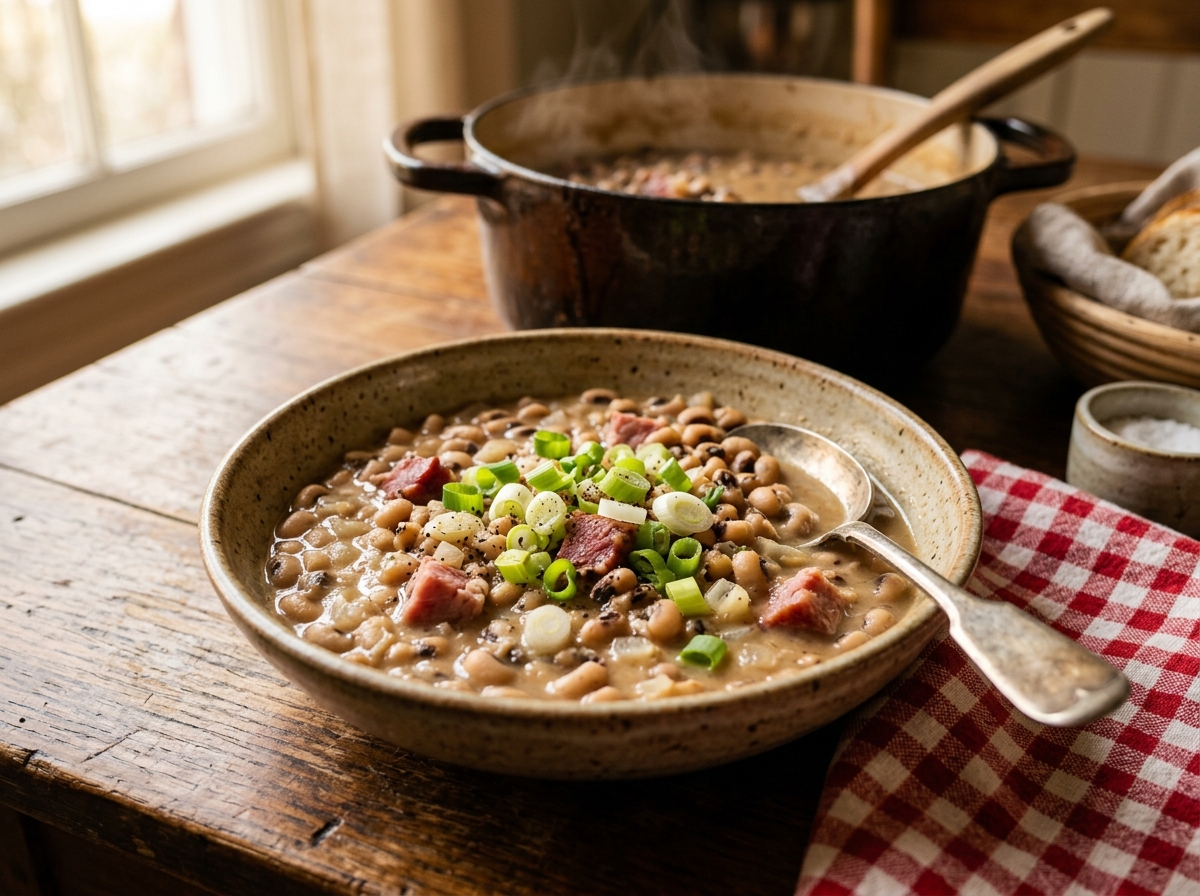
Black-eyed Peas
Creamy, tender beans that taste better when you cook them low and slow, with just enough seasoning to let them shine.
There is something about a pot of black-eyed peas simmering on the stove that fills a kitchen with a kind of quiet comfort. The beans soften gradually, the broth turns rich and mild, and you get the feeling you are doing something right just by standing there.
Yes, they are a New Year’s tradition in the South, tied to luck and new beginnings. But that is only half the story. These peas are so good as a side dish any time of year that once you learn how to cook them, you will make them all through the seasons. They go with roast chicken, collard greens, cornbread, or anything that needs something warm and grounding on the plate.
The secret is not to rush them and not to oversalt too early. Cook them gently, add your seasonings in layers, and let them become as tender as they want to be.
Black-eyed Peas
Serves 6 to 8 · Prep 10 min · Cook 1 hour 15 min
-
Add the rinsed peas and water to a large pot. Bring to a boil over high heat, then turn the heat down to low.
-
Add the ham hock or bacon, onion, garlic, pepper, salt, and bay leaves. Stir once.
-
Simmer uncovered for 1 hour to 1 hour 15 minutes, until the peas are completely tender but not mushy. They should break easily when you press one against the side of the pot with a spoon.
-
Taste and add more salt if needed. Stir in butter or oil if you want a richer finish. Discard the bay leaves and ham hock before serving.
-
If the pot looks too soupy, raise the heat to medium and let it simmer for another 10 to 15 minutes to reduce the broth slightly.
Why This Recipe Works
- Cooking at a bare simmer instead of a rolling boil keeps the peas from breaking apart or turning to mush. They soften evenly and hold their shape.
- The ham or bacon adds a savory depth that makes the peas taste complete without needing much else. The fat also enriches the broth that clings to the beans.
- Adding salt at the beginning, not at the end, lets it season the beans throughout cooking rather than just sitting on the surface. The peas absorb it gradually and evenly.
- A short rest after cooking lets the broth thicken slightly as the beans release their starch, creating a silky texture around each bite.
Tips for Best Results
- Do not skip rinsing the dried peas. It removes dust and debris that can make the broth cloudy.
- Resist the urge to stir too much. Stirring breaks the beans into pieces. Stir only at the start and once near the end to check tenderness.
- If your peas are old or from the back of the pantry, they may take longer to soften. Check them at 1 hour and add extra time in 15-minute stretches if needed.
- Salt early and taste near the end. It is easier to add salt than to fix oversalted peas.
Variations and Substitutions
- Leave out the meat and use vegetable broth for a vegetarian version. Add a splash of apple cider vinegar at the end to replace the savory depth the ham would have given.
- Stir in diced fresh tomatoes or a can of diced tomatoes during the last 15 minutes of cooking for a warmer, slightly tangy flavor.
- Add a pinch of cayenne pepper or hot sauce at the table if you like heat. It does not change the texture but brightens the taste.
- Cook with smoked paprika instead of or alongside the ham for a smokier flavor without the meat, though the result is less rich.
Frequently Asked Questions
How long do black-eyed peas keep in the refrigerator?
Store them in their cooking broth in a covered container for up to 5 days in the refrigerator. They will keep for 3 months in the freezer. Thaw them overnight in the fridge before reheating, or reheat straight from frozen on the stove with a little extra water.
Can I make them the night before?
Absolutely. Cook them fully, cool them to room temperature, then cover and refrigerate. They taste better the next day because the flavors have time to settle. Reheat gently on the stove with a splash of water until warmed through.
Can I use canned black-eyed peas instead of dried?
Yes, but the result is different. Use three cans (about 4 cups drained) and reduce the cooking time to 20 to 30 minutes. Canned peas are already soft, so you are mainly building flavor in the broth. The texture will be less firm than with dried peas.
Why are my peas still hard after an hour of cooking?
Old dried beans take longer to soften. Keep simmering and check every 10 minutes until they yield easily to a spoon. If they refuse to soften after 2 hours, they may be too old to cook properly, and starting fresh with a newer batch is worth it.
Make a pot of these this weekend, whether it is January first or July. They ask very little of you and give back comfort and flavor in every spoonful. Once you taste them cooked the slow way, you will understand why people come back to them year after year.