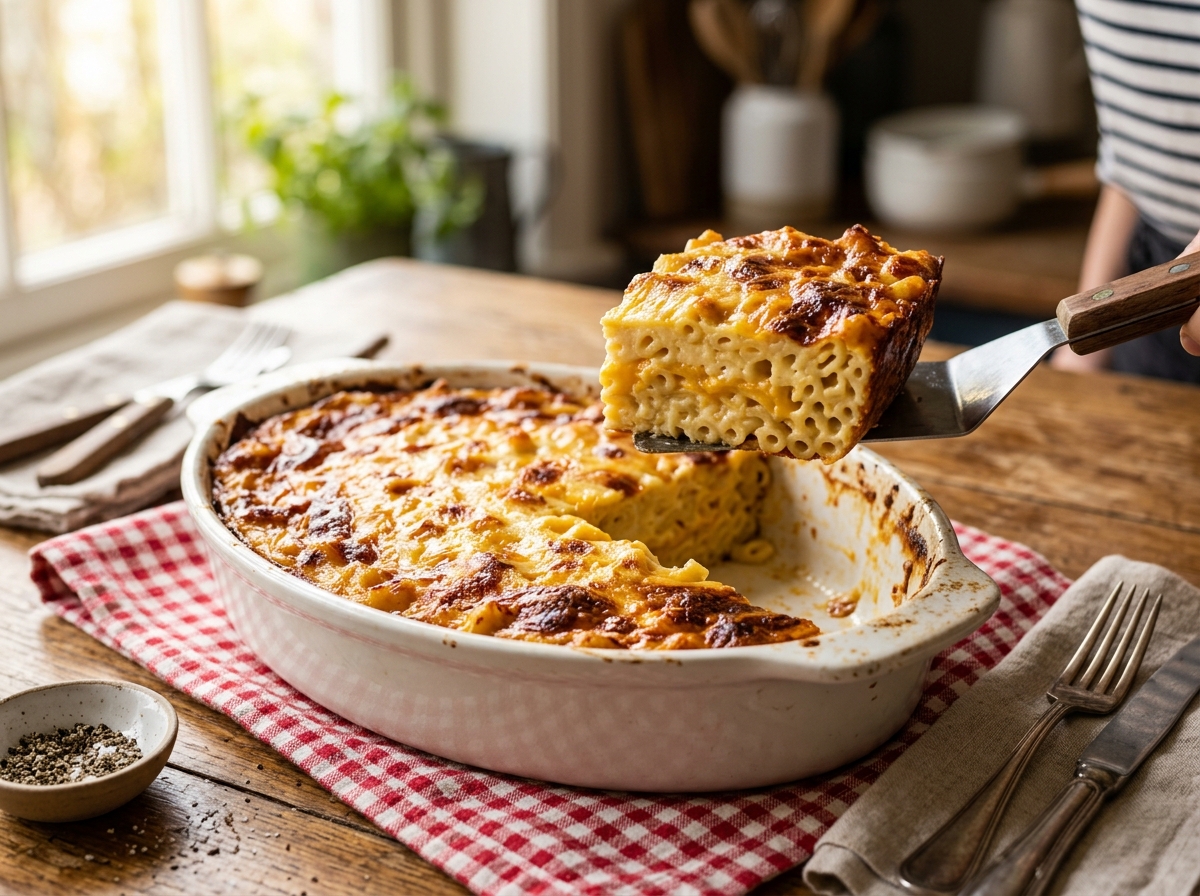
Baked Macaroni and Cheese
Creamy inside, golden on top, built with a custard of cheese sauce poured over sliced cheese layers.
There’s a moment on a cold weeknight when you walk past the oven and smell butter and cheese melting together, and suddenly everything feels easier. That smell comes from a dish that’s been feeding families for good reason: it’s one of the few sides that tastes like comfort and doesn’t ask much of you.
Most baked mac and cheese relies on mixing everything into a pot first, which works fine. But there’s another way, older and richer, where you build the dish in layers—sliced cheese between the noodles, then pour a smooth, custardy cheese sauce over the top. As it bakes, the sauce settles around everything, the cheese slices meld into the pasta, and the top turns golden and crisp. You end up with a texture that’s both creamy and structured, nothing watery or separated.
It’s the kind of dish people ask for again. It takes about an hour from start to table, and most of that is baking while you do something else.
Baked Macaroni and Cheese
Serves 6 to 8 · Prep 15 min · Cook 40 min
-
Heat the oven to 350°F.
-
Bring a large pot of salted water to a boil and cook the macaroni 2 minutes under the box time, so it’s still firm. Drain and set aside.
-
In a heavy saucepan, melt 4 tbsp butter over medium heat until it foams slightly, about 1 minute.
-
Sprinkle the flour over the butter and stir constantly for 2 minutes until the mixture smells nutty and turns pale golden.
-
Slowly pour in the warm milk while whisking continuously so no lumps form. Keep whisking until the sauce is completely smooth, about 3 minutes.
-
Reduce heat to medium-low and let the sauce simmer gently for 2 minutes, stirring often, until it coats the back of a spoon with a thin veil that doesn’t drip off immediately.
-
Remove from heat and stir in salt, pepper, and cayenne if using.
-
Spread half the cooked pasta into a buttered 9-by-13-inch baking dish.
-
Layer half the sliced cheddar and half the gruyère over the pasta, breaking the slices to fit.
-
Add the remaining pasta, then layer the rest of the cheddar and gruyère on top.
-
Pour the cheese sauce slowly over everything, tilting and gently stirring with a fork so the sauce flows around the pasta and cheese layers. You should see sauce pooling at the bottom and between layers.
-
In a small bowl, stir the melted butter into the panko until it looks like wet sand.
-
Scatter the panko mixture evenly over the top.
-
Bake for 35 to 40 minutes, until the top is deep golden brown and the sauce bubbles at the edges. The center should jiggle only slightly when you give the dish a gentle shake.
-
Let rest for 5 minutes before serving so the sauce sets slightly and won’t run all over the plate.
Why This Recipe Works
- Slicing the cheese instead of shredding it keeps pieces intact longer, so you feel distinct layers of melted cheese throughout, not a uniform blend.
- The custard-style sauce is thickened with a roux and tempered with warm milk, which means it won’t break or separate as it bakes and allows the pasta to absorb flavor without getting dry.
- Undercooking the pasta by 2 minutes means it finishes cooking from the residual heat and sauce, staying tender without turning to mush.
- The panko topping is tossed in butter before baking, which guarantees it browns and crisps instead of staying pale or soggy.
- A 5-minute rest after baking lets the starch swell and the sauce thicken so the dish holds its shape on the plate instead of sliding apart.
Tips for Best Results
- Warm the milk before adding it to the roux. Cold milk causes lumps and takes longer to heat through, which can scorch the bottom of the pan.
- Use two cheeses if you can. One cheese alone can taste flat; a sharp cheddar paired with a nutty gruyère or emmental builds depth.
- Don’t skip the rest. A dish pulled straight from the oven will look molten and slide around the plate; 5 minutes lets it firm up without cooling down.
- If the top starts browning too fast, tent it loosely with foil for the last 10 minutes of baking.
- Avoid pre-shredded cheese with cellulose added, which prevents smooth melting. Slice or grate your own from a block.
Variations and Substitutions
- Add crumbled bacon or diced ham between the cheese layers for a smoky, salty twist.
- Stir 1 tbsp Dijon mustard into the sauce for a subtle tangy edge that makes the cheese taste sharper.
- Mix in fresh thyme or a pinch of smoked paprika into the panko topping for an herb-forward version.
- For a lighter version, swap half the whole milk for half-and-half to reduce fat while keeping creaminess, though the dish will be slightly less rich.
- Use cavatappi or small shells instead of elbow pasta to catch more sauce in each bite, though cooking time stays the same.
Frequently Asked Questions
How do I store leftovers?
Cover and refrigerate in an airtight container for up to 3 days. Reheat in a 325°F oven, covered with foil, for 15 to 20 minutes until warmed through. Microwaving works in a pinch but can make the edges rubbery.
Can I make this ahead and bake it later?
Yes. Assemble completely, cover with foil or plastic wrap, and refrigerate for up to 8 hours. Bake straight from the fridge, adding 5 to 10 minutes to the total time. Don’t freeze; the texture of the sauce suffers when thawed.
What if I don’t have gruyère?
Use an equal amount of emmental, fontina, or smoked gouda. The sauce will taste different—less nutty, or more smoky—but the texture stays the same. Avoid soft cheeses like brie or fontina that don’t slice cleanly.
Why does my mac and cheese look curdled or watery?
If the sauce looks broken, the heat was too high or you didn’t whisk enough when adding the milk. If it’s watery, the pasta was overcooked before baking or the sauce wasn’t thick enough. Cook the pasta just under and test the sauce thickness before pouring it over—it should coat a spoon.
This is the kind of dish that gets better each time you make it because you start remembering small things—when the sauce looks right, how long it really takes to bake in your oven, which cheese you prefer. Make it this week. Taste it. Make it again the way you like it.