Skillet Cornbread
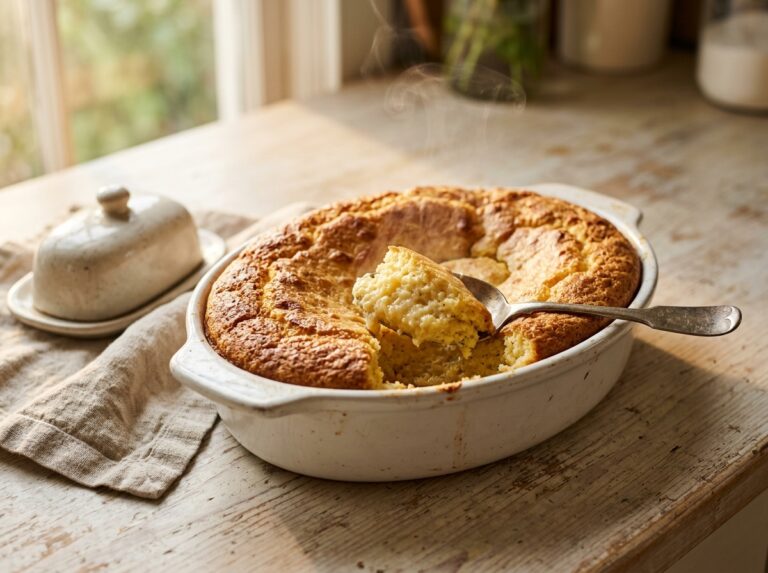
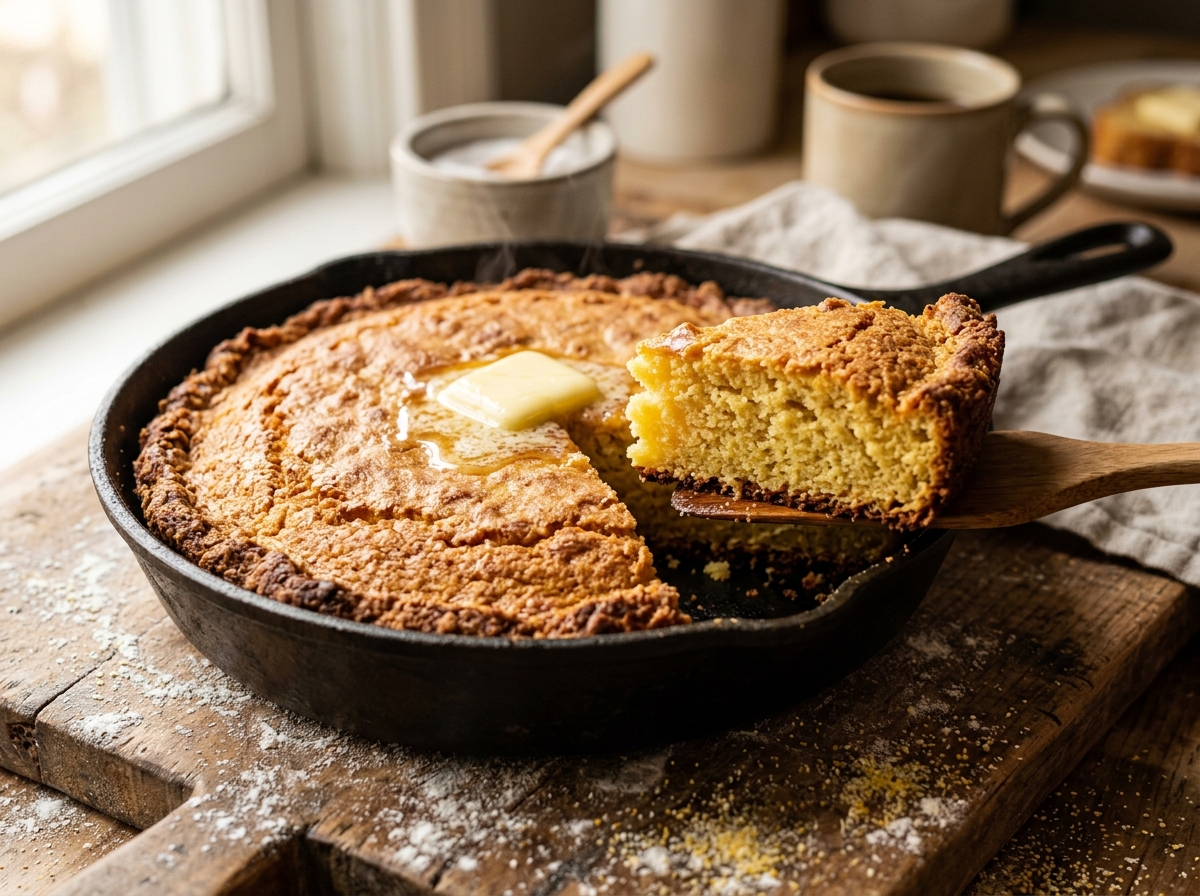
Golden, tender cornbread with a crispy crust from a screaming hot cast iron skillet.
There’s a moment right before you pour batter into a preheated skillet when you hear that sharp sizzle and smell the butter turning nutty. That sound means something good is about to happen.
Skillet cornbread is one of those dishes that seems simple until you make it wrong. The secret isn’t hiding in the ingredients—it’s in how you treat the pan. A cold skillet gives you dense, pale cornbread. A hot one, with fat already melting in it, gives you a crust so crispy it crackles when you bite into it.
You’re already making cornbread. You might as well make the version that’s worth the effort.
Skillet Cornbread
Serves 8 · Prep 10 min · Cook 25 min
-
Place a 10-inch cast iron skillet in a 425°F oven with the butter or grease inside. Let it heat for 5 minutes, until the fat is smoking lightly and the pan is too hot to touch.
-
While the skillet preheats, whisk together cornmeal, flour, sugar, baking powder, and salt in a large bowl.
-
In another bowl, whisk together milk and egg until smooth.
-
Pour the milk mixture into the dry ingredients and stir just until combined. The batter should be thick and lumpy, not smooth.
-
Carefully remove the hot skillet from the oven. Pour the batter into it in one motion—it should sizzle and bubble immediately at the edges.
-
Return the skillet to the oven and bake for 20 to 25 minutes, until a toothpick inserted in the center comes out clean and the top is deep golden brown.
-
Let it rest in the skillet for 5 minutes. Run a thin knife around the edges and turn it out onto a wire rack or serve straight from the pan.
Why This Recipe Works
- Preheating the skillet with fat in it creates a thermal gradient that sets the batter’s edges before the center rises, trapping moisture inside while the outside crisps.
- Cornmeal absorbs liquid slowly, so lumpy batter prevents overdevelopment of gluten and keeps the crumb tender and open rather than dense.
- A 425°F oven is hot enough to caramelize the exterior without overcooking the interior in the time it takes the center to set.
- Resting the cornbread in the hot pan for 5 minutes carries over just enough heat to firm up the bottom without drying it out.
Tips for Best Results
- Don’t open the oven door to peek. The temperature drop will sink the center. Wait until you can smell it toasting, around the 20-minute mark.
- Stir the batter by hand and stop as soon as the dry ingredients disappear. Overmixing develops gluten and makes the cornbread tough.
- If your skillet is smaller or larger than 10 inches, adjust your baking time—an 8-inch skillet may need only 22 minutes, a 12-inch may need 28.
- Use bacon grease instead of butter for deeper, savory flavor that pairs especially well with chili or greens.
- If the top is browning too fast but the center isn’t set, tent the pan loosely with foil for the last few minutes.
Variations and Substitutions
- Add 1 cup of fresh or thawed corn kernels to the batter for sweetness and texture.
- Stir in 1 cup grated sharp cheddar and 2 diced jalapeños for a spicy, savory version.
- Replace half the milk with buttermilk and reduce baking powder to 1.5 tsp for tangier flavor and a more tender crumb.
- Use fine polenta instead of cornmeal for a slightly grainier texture.
- For dairy-free, swap milk for unsweetened oat or almond milk and use oil instead of butter—the crust will be less crispy but still good.
Frequently Asked Questions
How do I store leftover cornbread?
Keep it in an airtight container or wrapped tightly in foil at room temperature for up to 2 days. It also freezes beautifully for up to 3 months—just thaw at room temperature and reheat gently in a 350°F oven if you want it warm again.
Can I make the batter ahead of time?
You can mix the dry and wet ingredients separately up to 4 hours ahead, but don’t combine them until you’re ready to bake. Combine just before pouring into the hot skillet, or the baking powder will start to activate and you’ll lose lift.
What if I don’t have a cast iron skillet?
A dark metal 9-inch cake pan will work, though you won’t get the same crispy crust. Preheat it the same way with the fat inside, and the baking time will be about the same. Glass bans conduct heat differently and may brown too quickly on the bottom.
Why did my cornbread sink in the middle?
This usually means the oven temperature wasn’t hot enough or you opened the door too early and the center collapsed before it set. The center needs 20 to 25 minutes of steady, uninterrupted heat at 425°F to firm up. A skillet that wasn’t hot enough when you poured the batter in can also cause this.
Make this once and you’ll understand why cast iron cornbread is worth the fuss. The crust is the whole point—it’s where the magic lives. Pull it from the oven while it’s still hot, break off a corner, and taste what preheating actually does.